



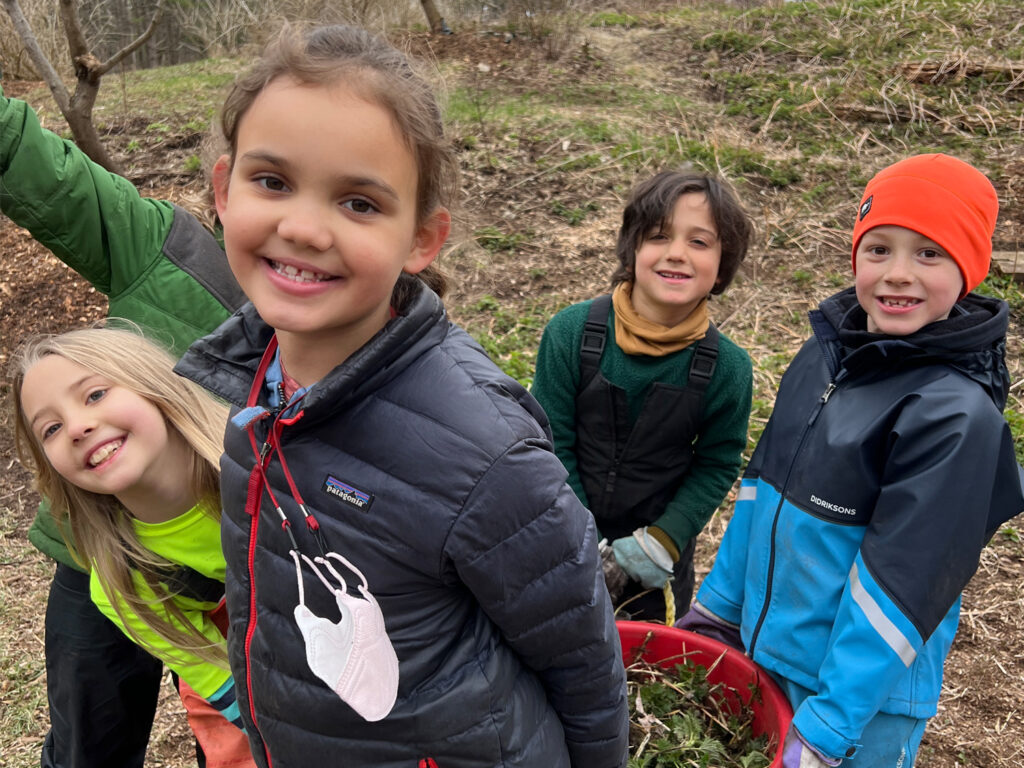
Our philosophy and curriculum are rooted in the principles of nature mentoring and Waldorf education. Through carefully created experiences–and the spontaneous opportunities that nature offers up each day–we strive to give time and space for curiosity to inspire further inquiry. In this way, knowledge about the natural world can deepen over time and at their own pace.
Key principles include:
Low teacher to student ratio: Class size is typically 12-14 students and 3 teachers.
Total Nature Immersion: 100% outdoors in all reasonable and safe weather conditions resulting in a close connection to the natural world in all seasons.
Waldorf Education: Age-appropriate curriculum to honor the developmental stage of the child. Enrollment for Forest School & Field School tightly adheres to specific age ranges in order to honor and support developmental stages.
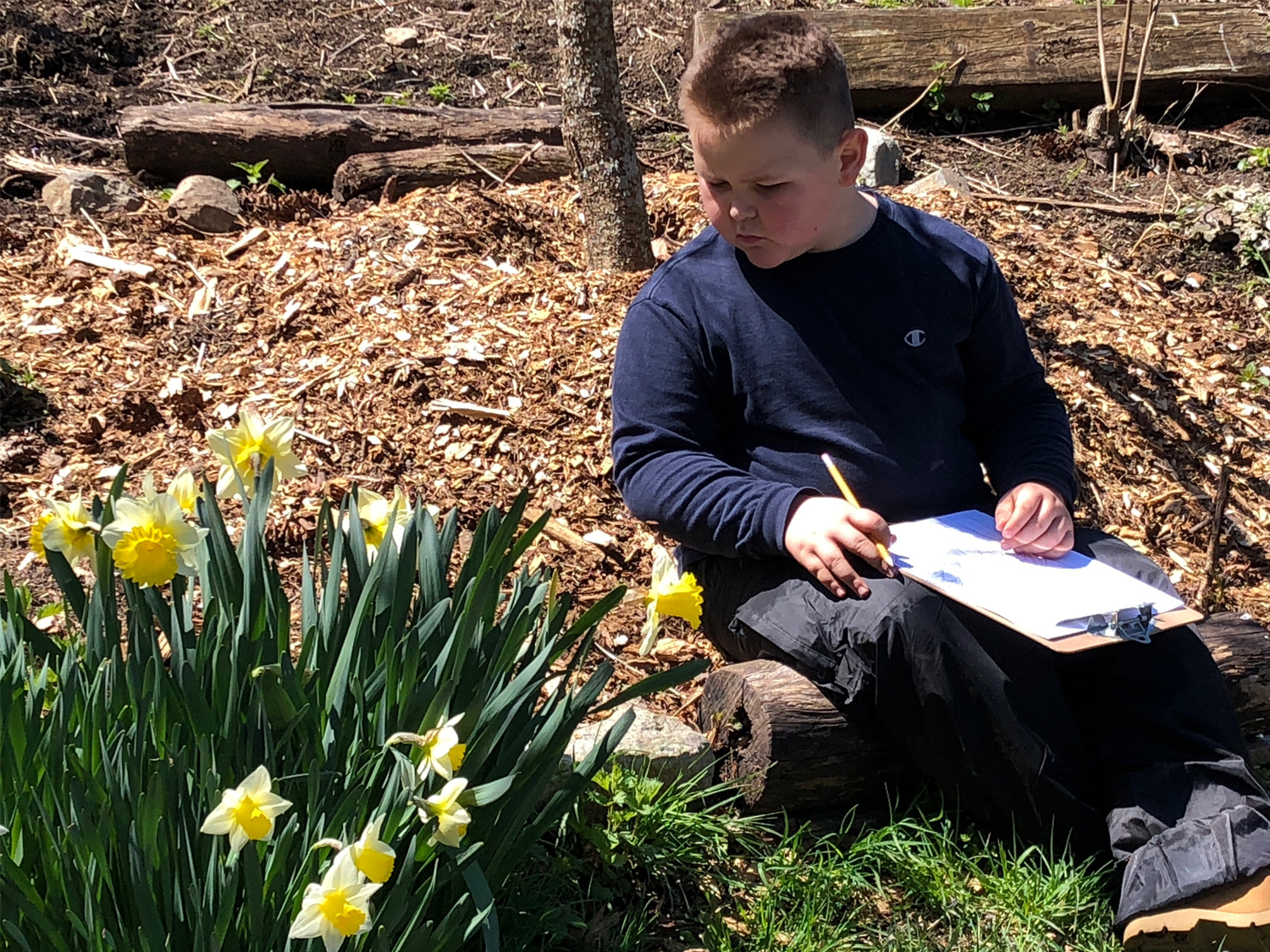
Main lesson: a block learning approach to education that focuses on one topic for about an hour as part of our day for about 3-5 weeks. Teachers engage students during this time through lecture, movement, art, storytelling, recitation and lab work to enhance our nature studies. Relevant and engaging blocks this year may include botany, zoology, astronomy, geology, fables and folktales, etc. Our studies are collected in a nature journal that students may take home in May.
Songs and oral storytelling to support literacy, language development, imagination, creativity and community building.
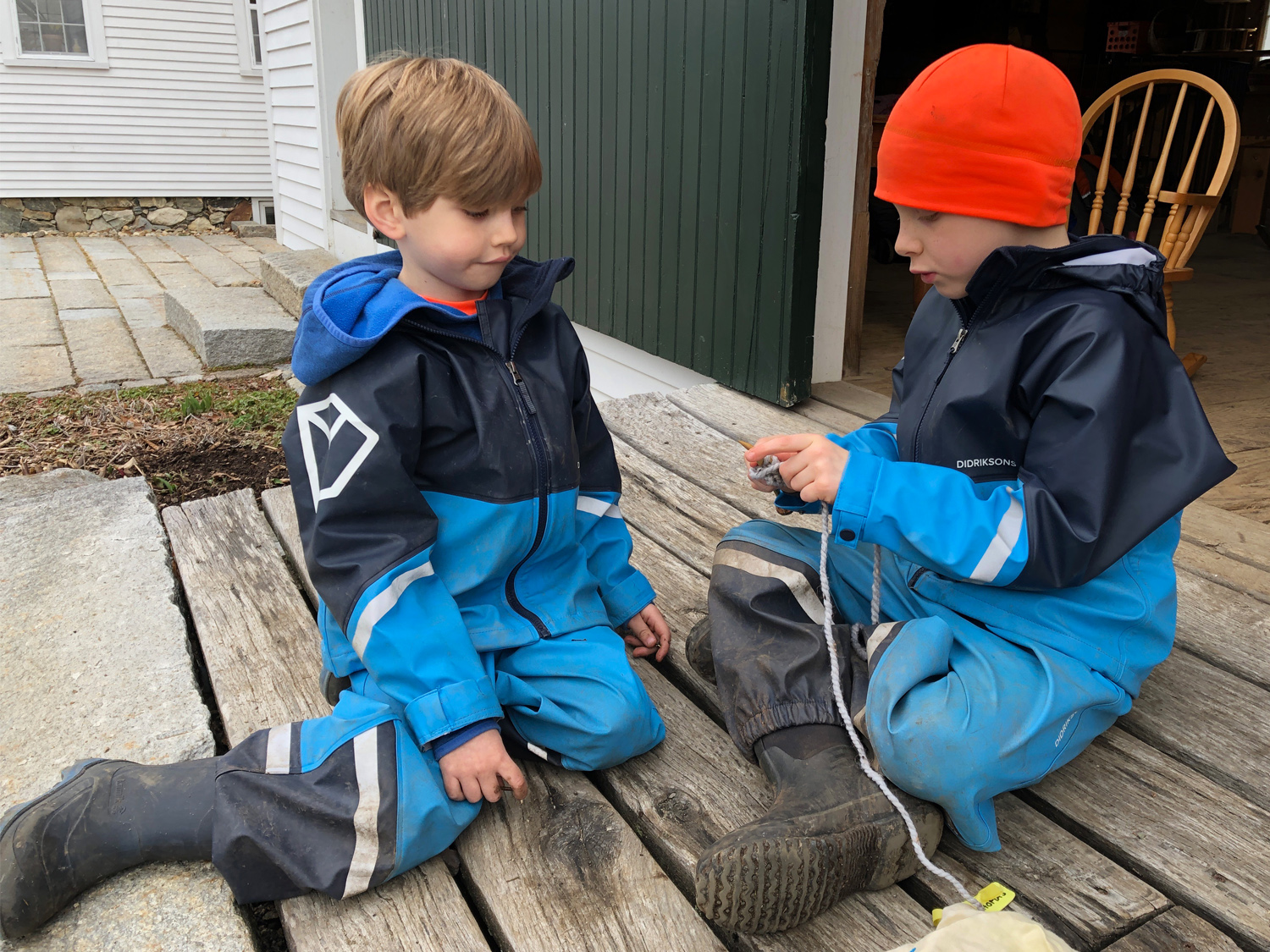
Projects (whittling, cordage, knot-tying, etc.) and handwork (sewing, embroidery, knitting, etc.) to increase cognitive skills, strengthen fine motor skills and enhance the ability to follow a project through to completion.
Unstructured Time in Nature: Students are given time and space to follow their curiosity
Place-Based Education: Total immersion in local landscape, heritage, and culture to build personal relationships with the land and its inhabitants.
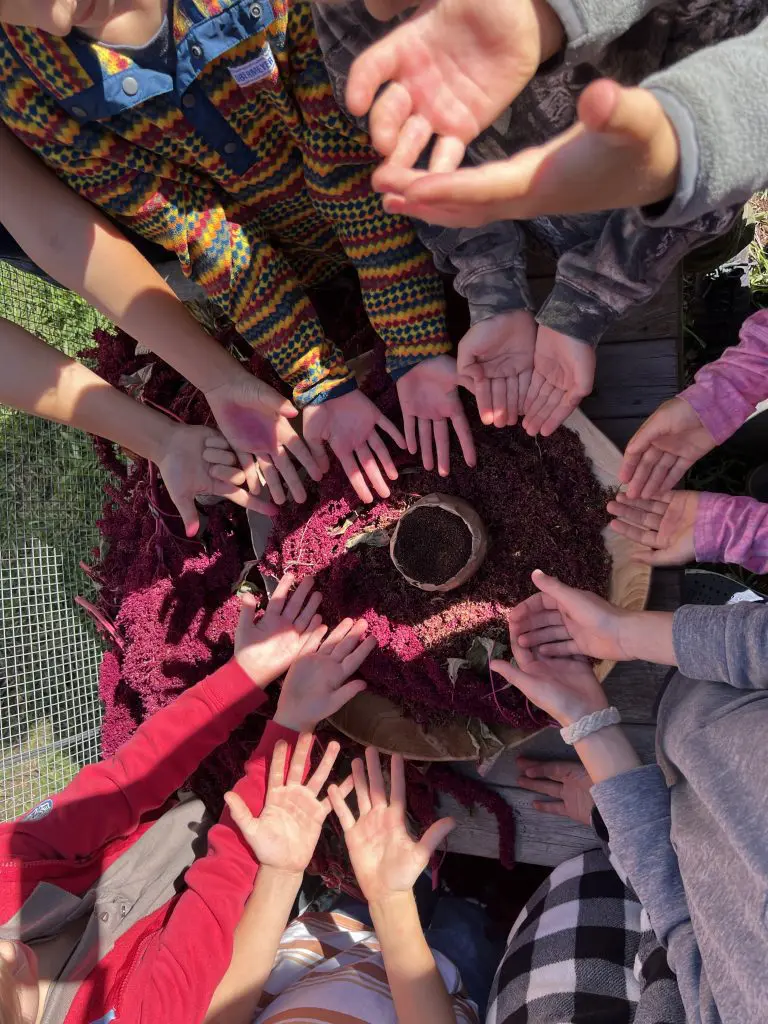
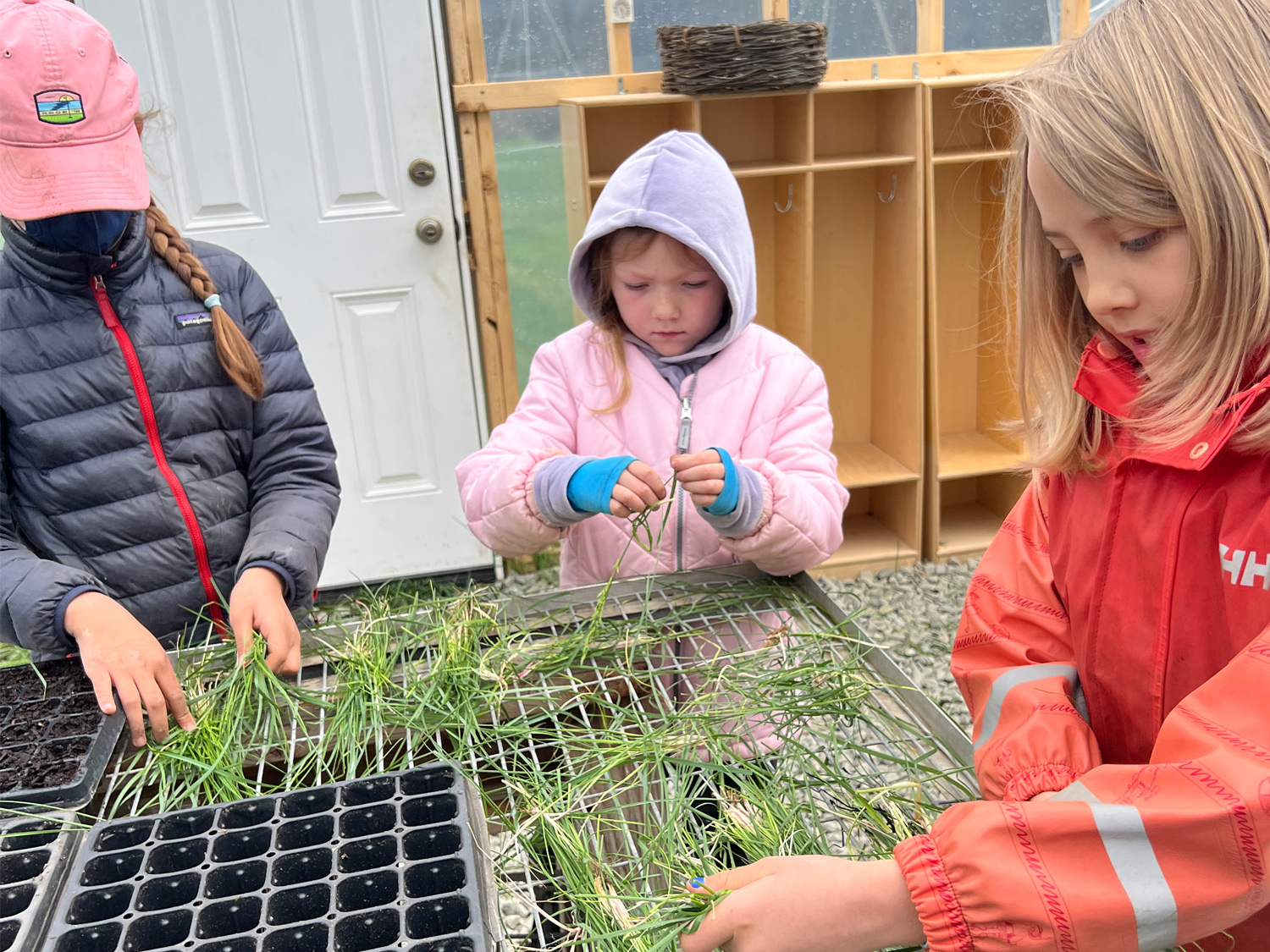
Land Stewardship & Agricultural Arts: While at the farm in all seasons, students engage in hands-on learning in the gardens to deepen their understanding of the ecosystem around them and invite wisdom as to how to live with the land instead of upon it.
Each day is filled with what nature offers up as we further integrate cyclical lessons sourced from the seasonal rhythms. With nature as our teacher, students may learn:
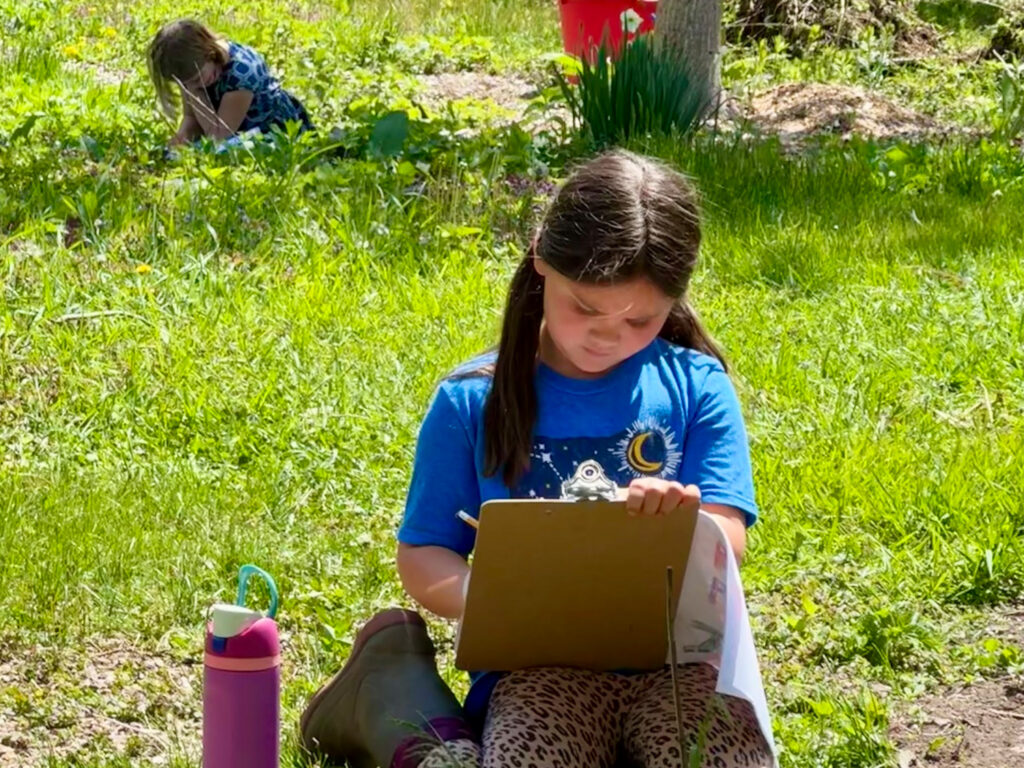
At Forest School, we also build in time for open-ended play, the true work of childhood. Play is the most direct pathway to cultivating and strengthening divergent thinking, social and emotional skills, cognitive functions, empathy for the natural world, physical competency and confidence, communication skills, and building a long-lasting personal connection to nature.
We embrace a resilient mindset and give children the opportunity to solve problems on their own. Developing new skills and resolving challenges in the face of frustration can cultivate empathy, flexibility, self-awareness and self-regulation, together known as emotional intelligence. We believe that developing initiative, persistence, creativity, and a capacity for problem solving are essential to future academic success.
With strong retention of returning students, we anticipate limited openings next school year. We invite you to join our waitlist and we will follow up as spots become available.
Location:
Boxford.
This program is held 100% outdoors, with inclement weather shelter available if needed.
Ages:
Forest School: Ages 6-8 (Grades K-2)
Field School: Ages 9-12+ (Grades 3-6);
A 12 -14 (Grades 7 & 8) group gathers on Wednesdays
Each class day is limited to 16 students and will be led by three teachers. Most children attend one day per week. Thursdays are reserved for children who attend twice/week.
Time & Days:
2026-2027 School Year: September 15, 2026, to May 28, 2027.
At this time, our waitlist is open!
There is a 5-week winter break in December/January. We also break for one week in November, February and April.
Enrollment Options are:
~ Attend once per week on Tuesday, Wednesday or Friday from 9:30 a.m. – 3:30 p.m.
~ Attend twice per week with Thursday as an added second day only for students attending on Tuesday or Wednesday. Wednesday Field School will again offer a split Level I (Ages 9-11) and Level II (Ages 12+) program.
Thursday is reserved for students choosing to attend a second day. The curriculum will deepen the learning each week with advanced material, additional projects, and extended time in nature.
Cost:
Tuesdays, Wednesdays or Thursdays: $3,049 total tuition for one day per week, September through May. Billing plans may again span nine equal installments, July through March.
Financial Assistance and monthly payment plans available.
Statement of Non-Discrimination:
Merrohawke does not discriminate on the basis of race, color, gender, religious affiliation, age, sexual orientation, national origin, disability or family configuration. Toilet training/proficiency is not an eligibility requirement for enrollment. Merrohawke will make every reasonable effort to ensure that a child with disabilities is able to participate in our programming in the same way as the other children enrolled. When made aware of the disability of a child enrolled, staff will meet with parents to discuss what reasonable changes can or should be made for the child to be successful at Merrohawke.